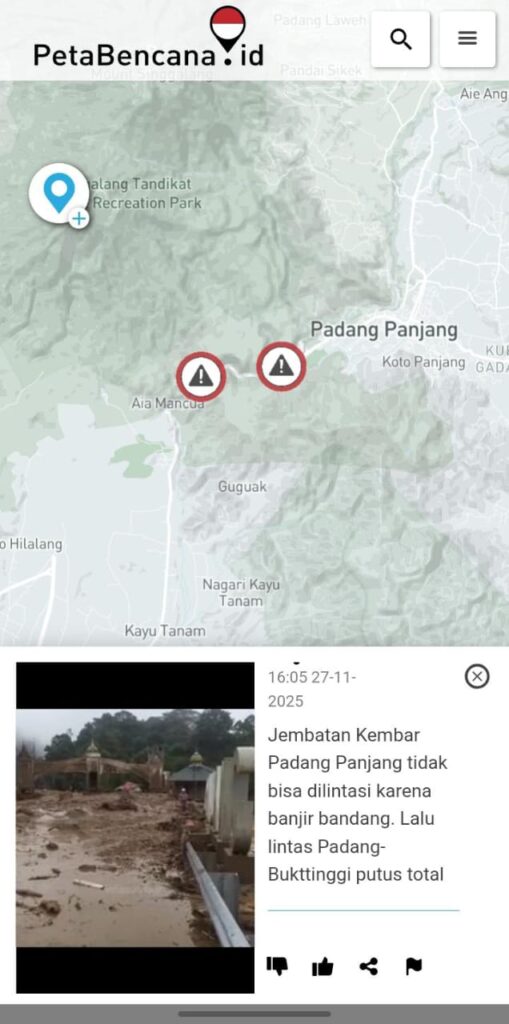
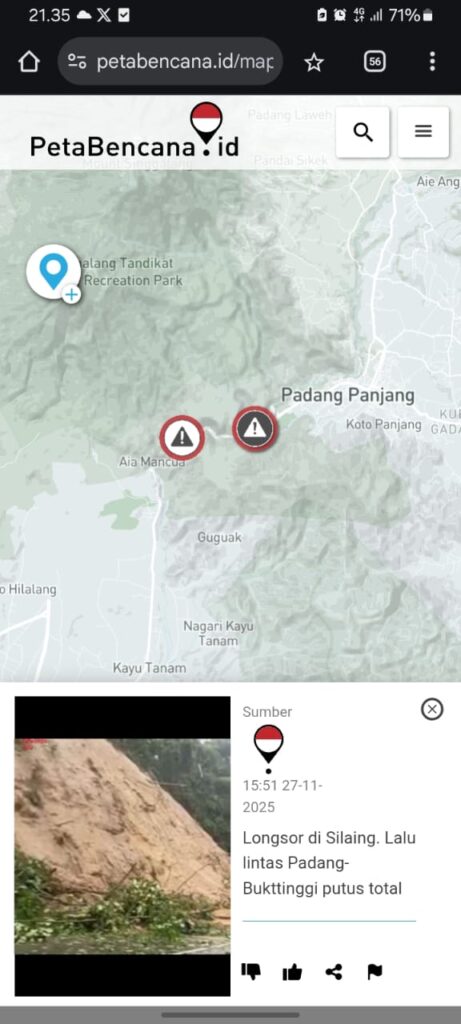
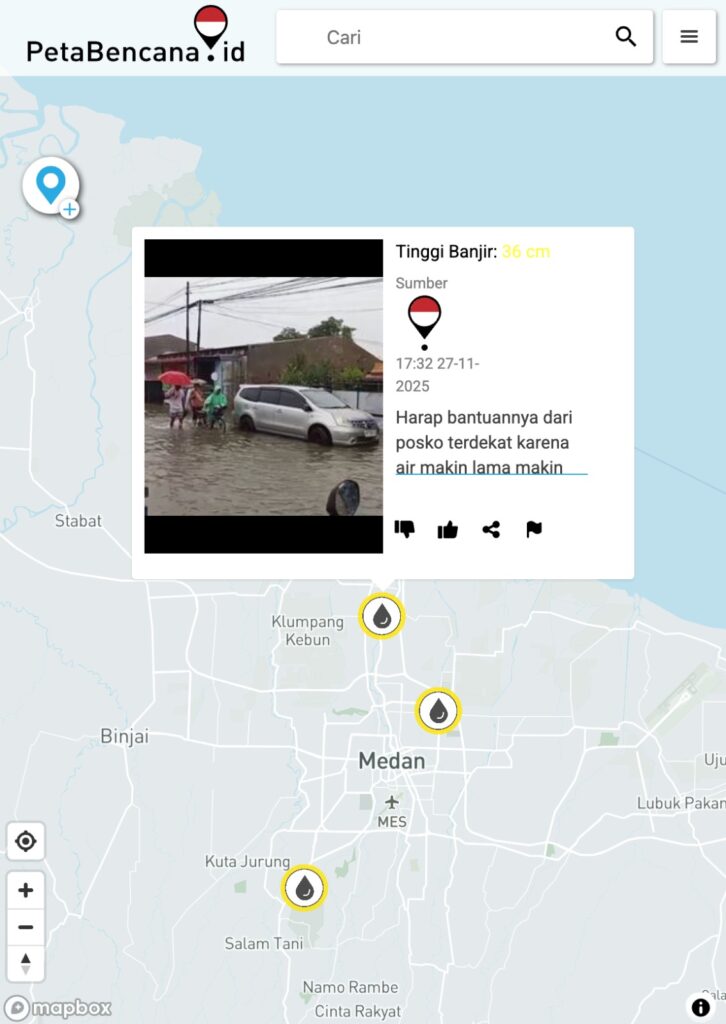
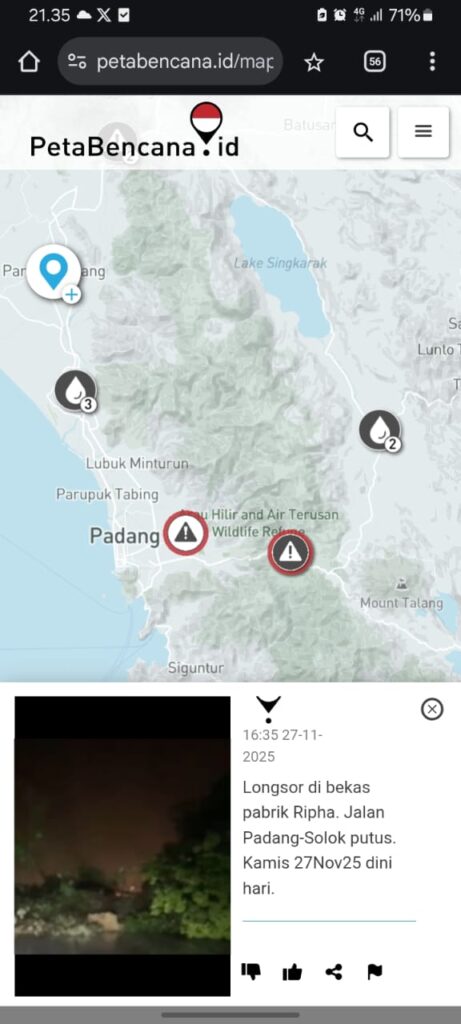
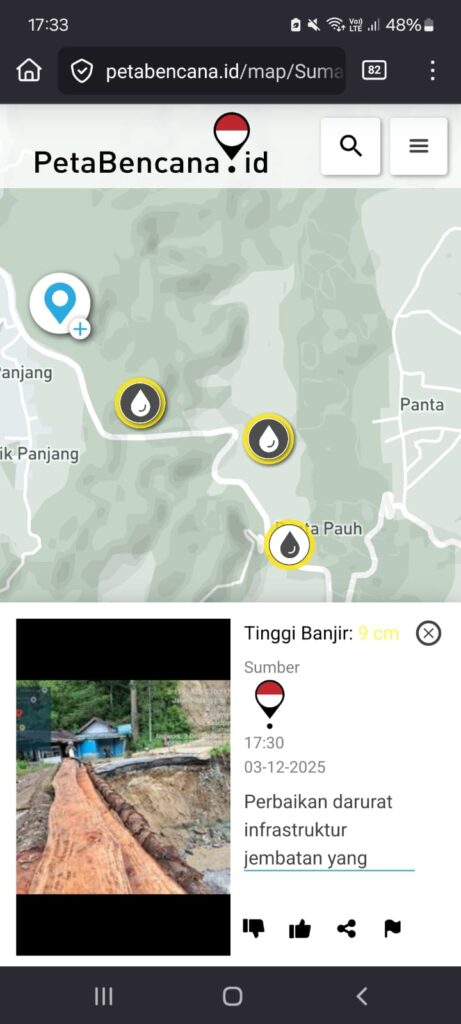
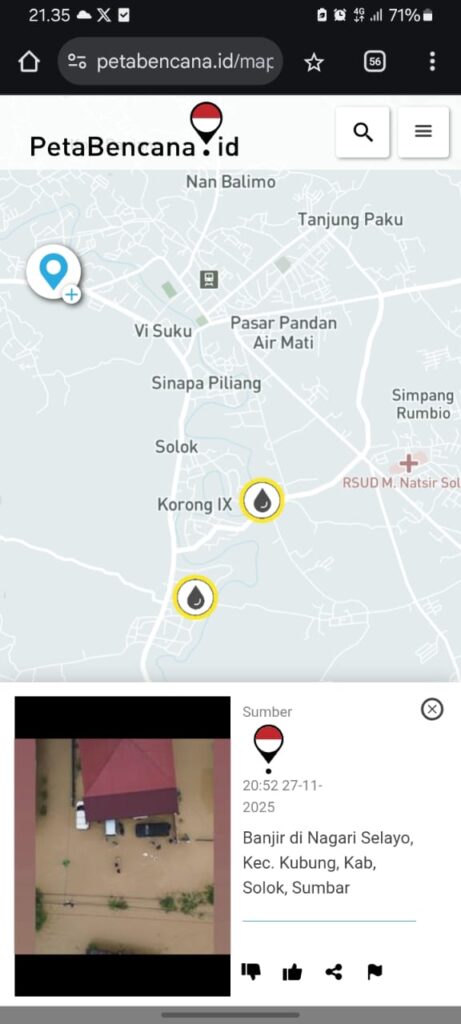
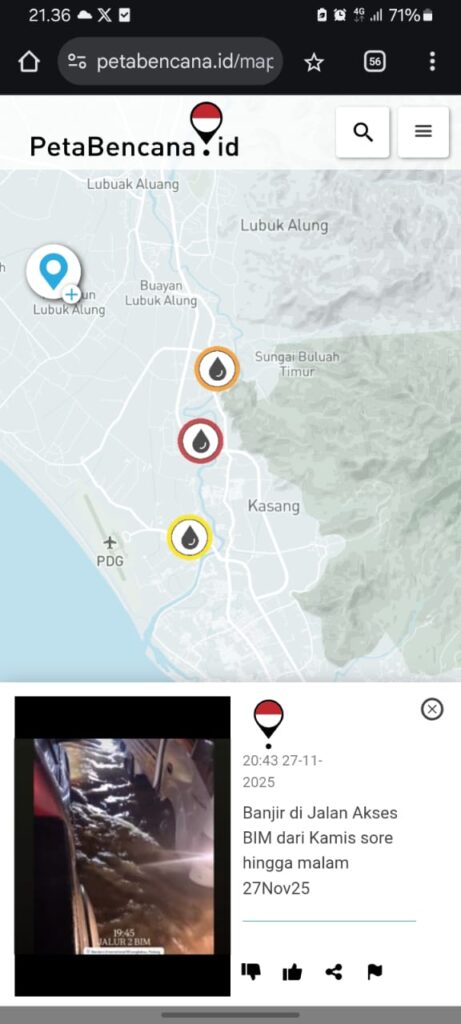
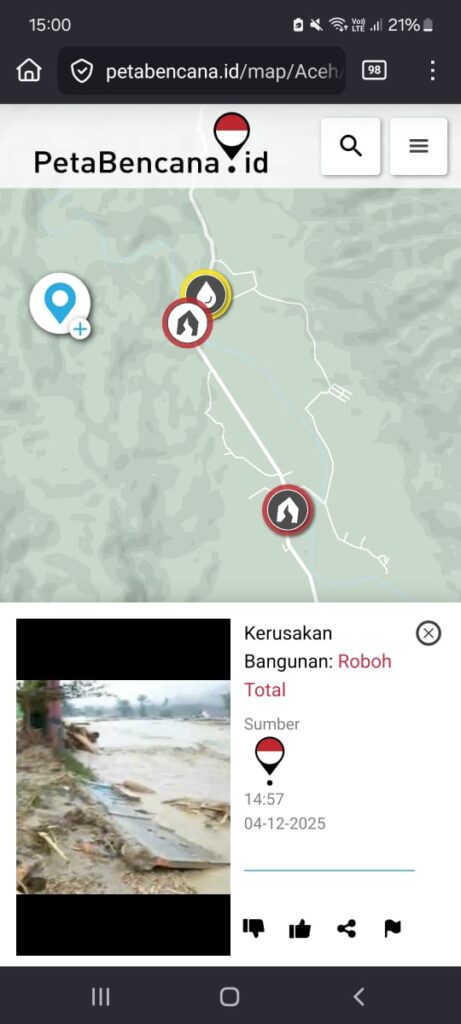
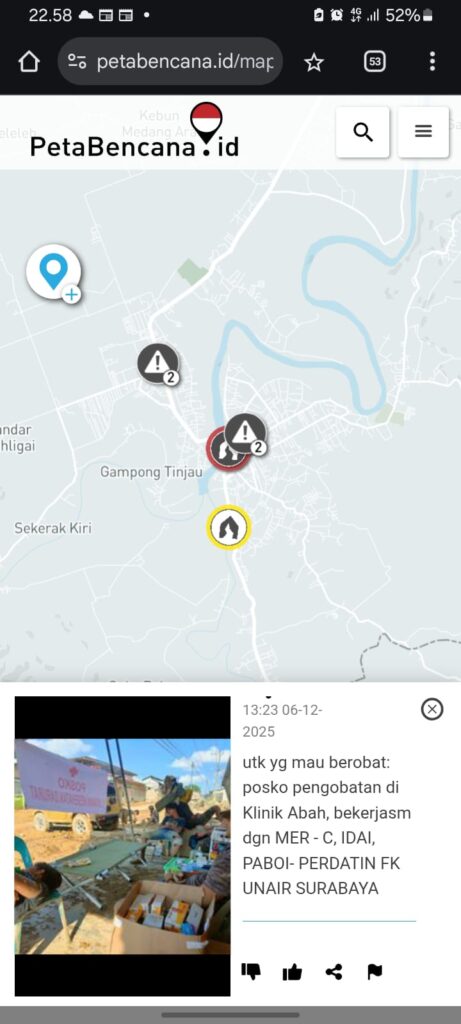
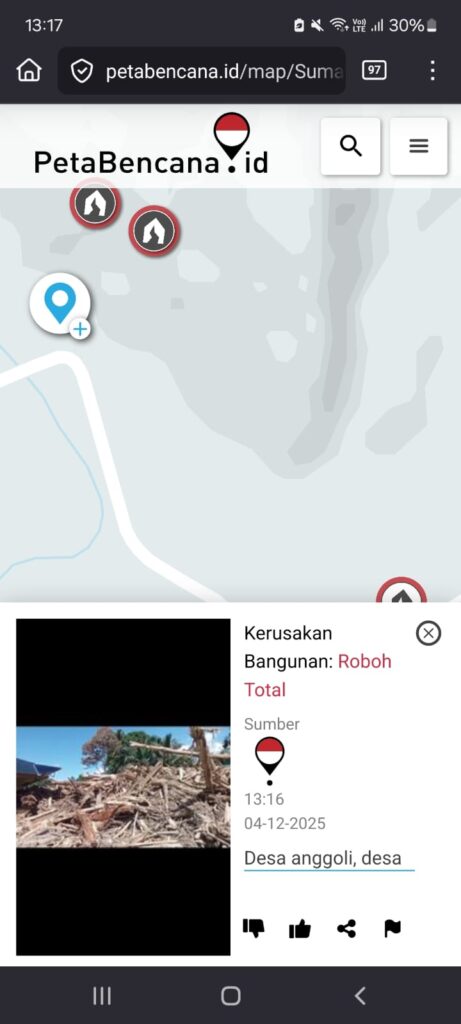
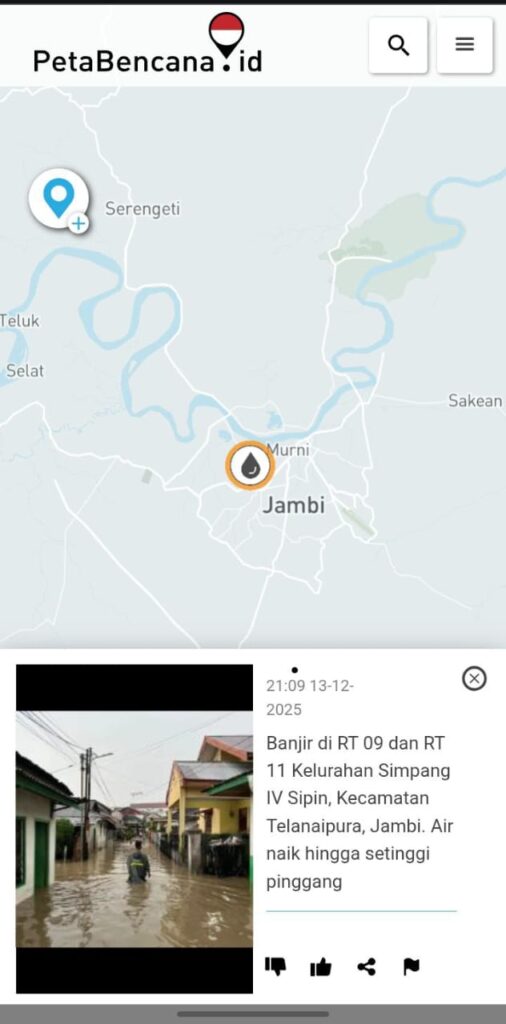
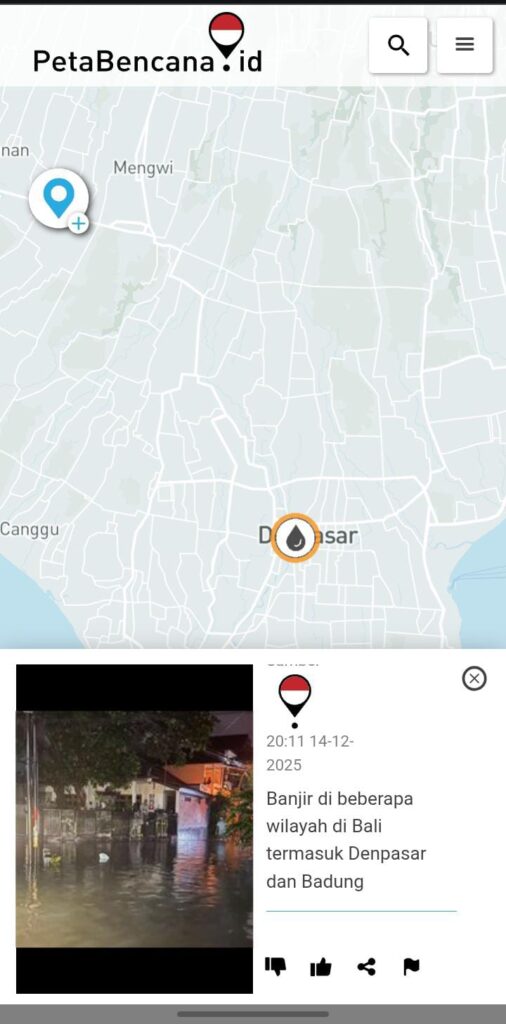
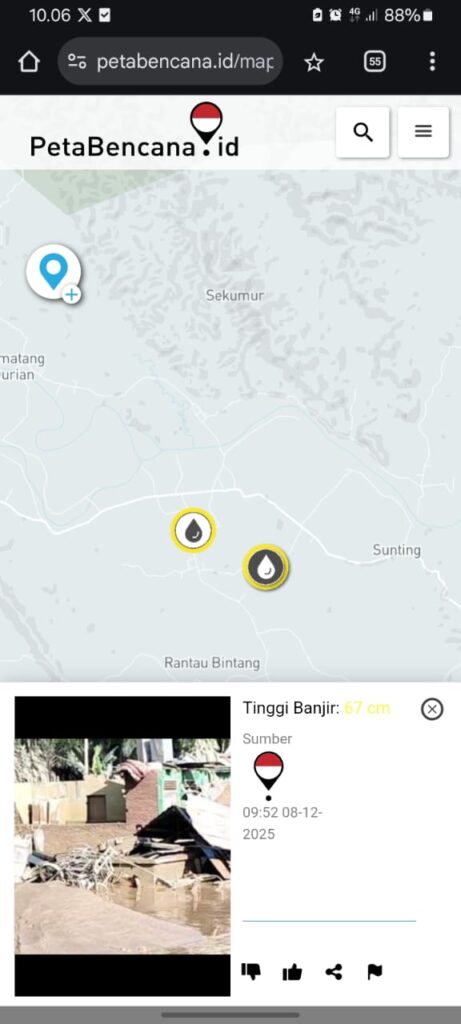
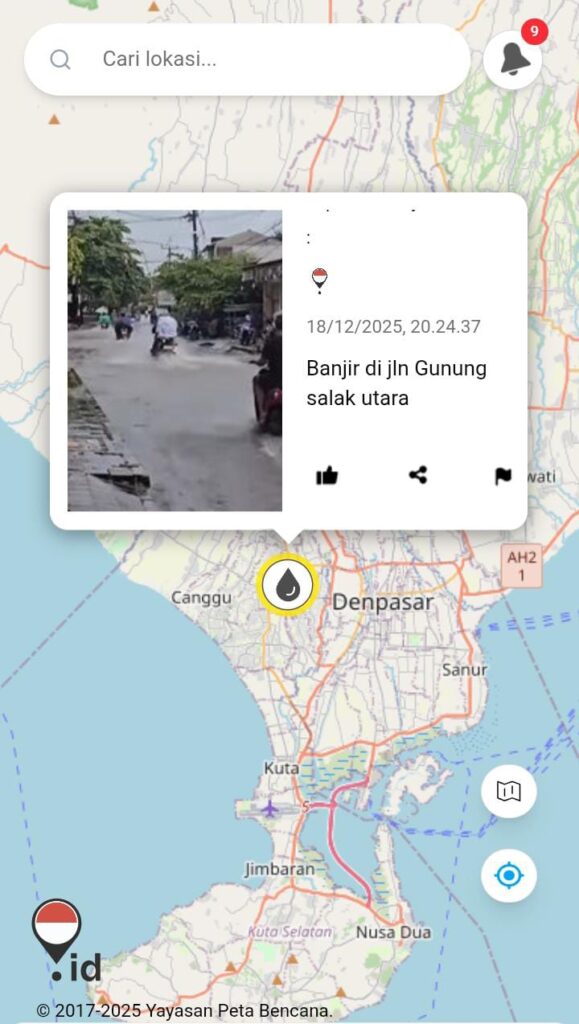
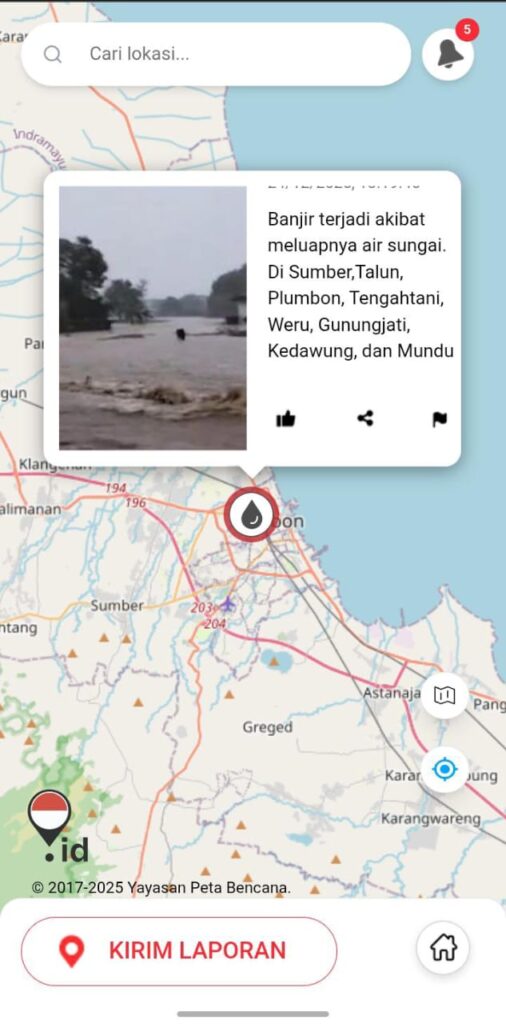
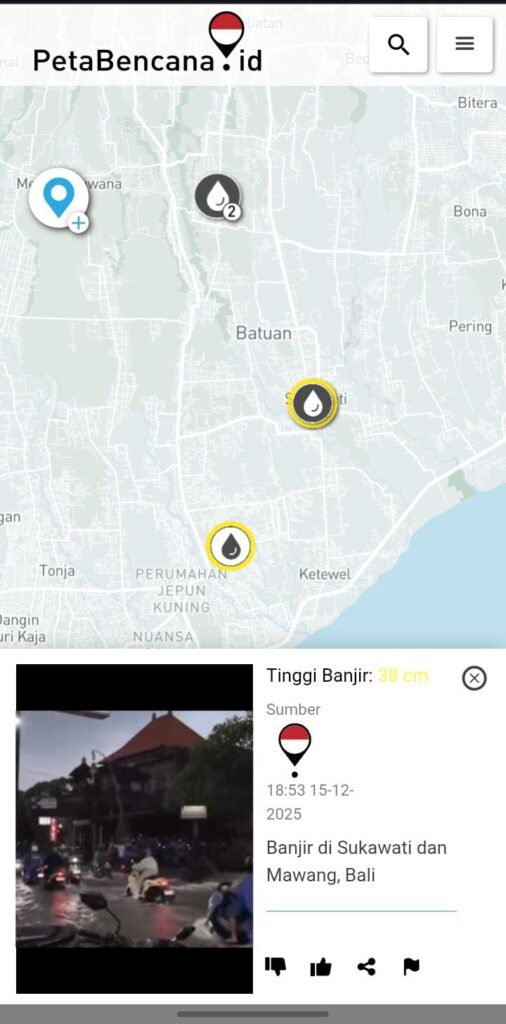
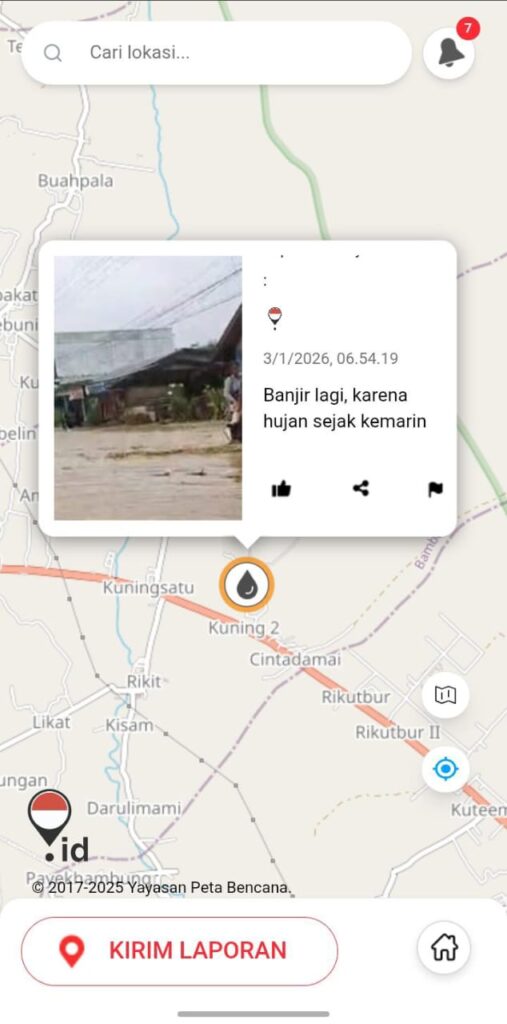
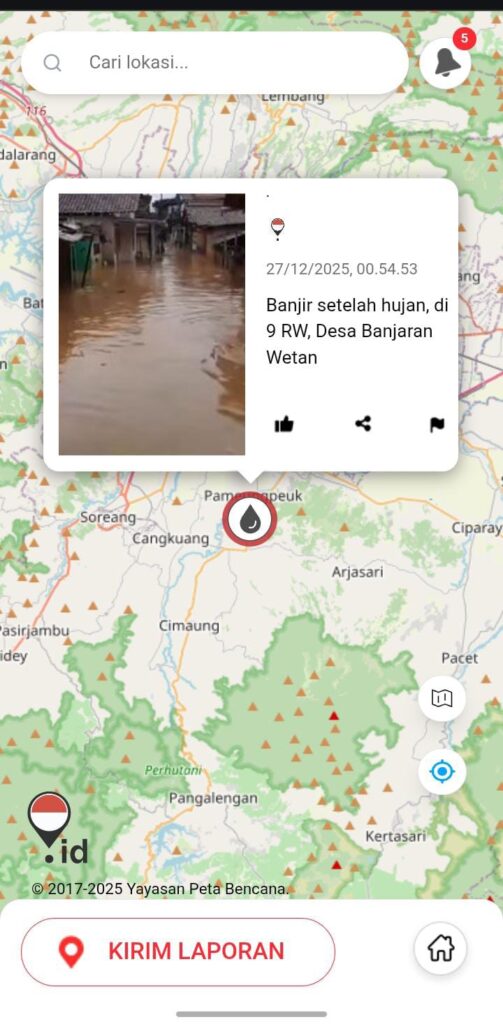
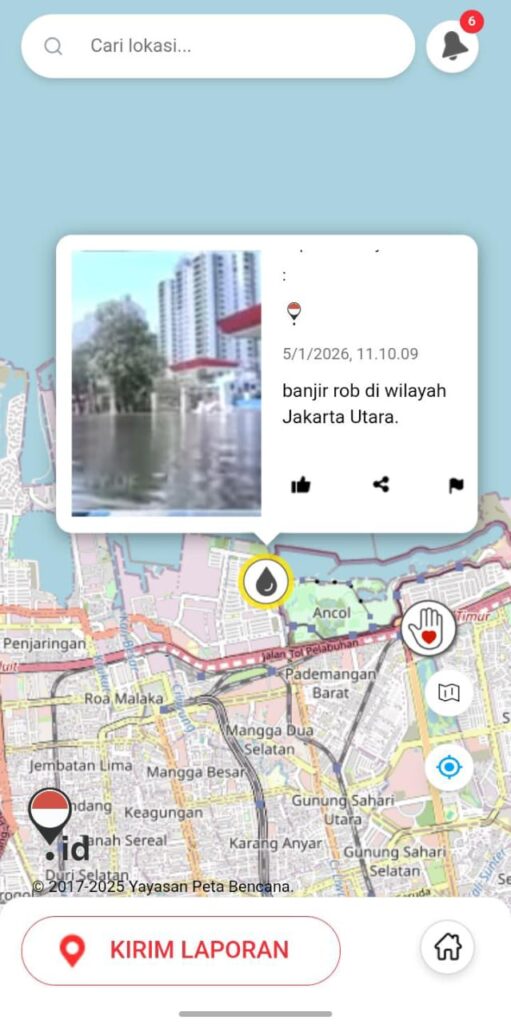
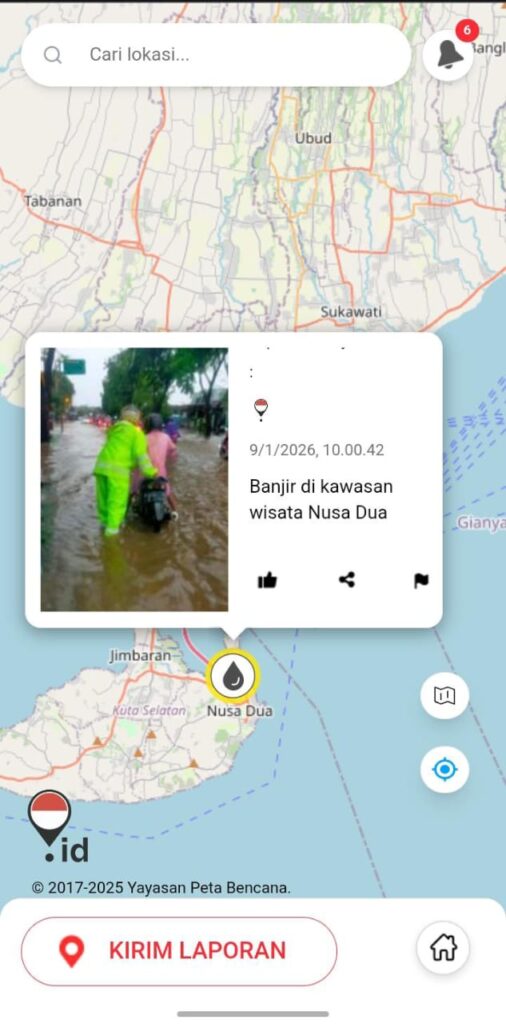
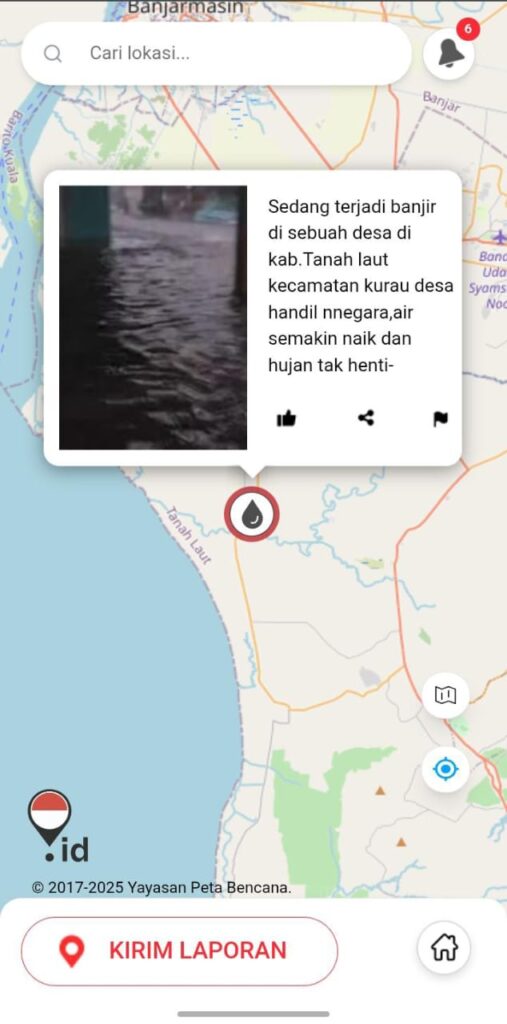
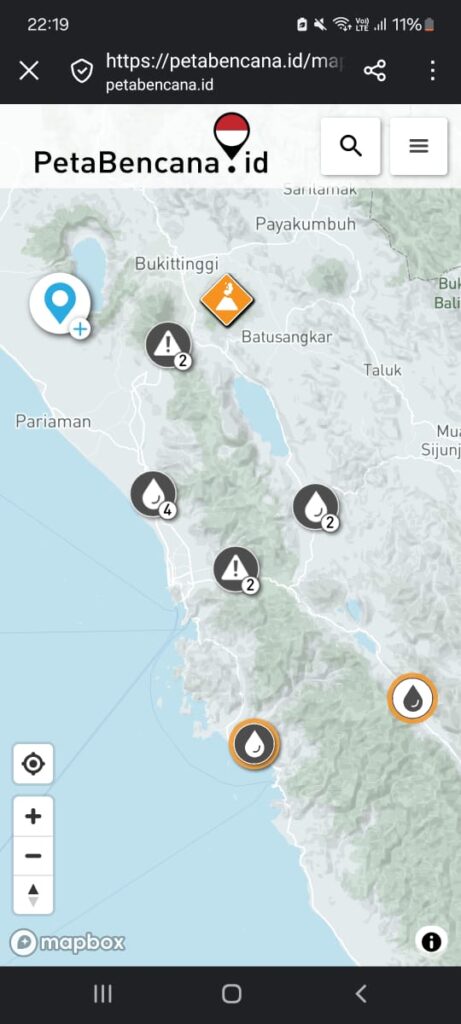
In the final months of 2025, heavy and persistent rainfall affected large parts of Indonesia. Floods and landslides were reported across Sumatra, Java, Bali, Kalimantan, Bengkulu, and other regions, often emerging quickly and spreading across neighborhoods, roads, and river basins. Local governments declared emergency responses, thousands of families were displaced, critical infrastructure was damaged, and communities across multiple provinces were pushed into crisis.
Amid this wave of impacts, PetaBencana.id has been a critical channel for real-time information sharing, community reporting, coordination, and early warning; helping local partners, government agencies, journalists, volunteers, and residents stay informed and make life-saving decisions.
In November, Ajang Syarip from Cisurupan, Garut, West Java, reported flooding to PetaBencana.id as conditions worsened with heavy rainfall. “I was surprised how quickly help arrived after I submitted a report to PetaBencana.id. Heavy equipment from the local fire department (DAMKAR), followed by local government emergency management teams (BPBD) handling evacuation and clean up. Food aid was also distributed soon after.” For Ajang, the speed was striking, a reminder that when local observations are communicated clearly and quickly, response can follow while the situation is still manageable. The speed of this response reinforced the value of having a clear, trusted reporting channel that connects communities directly to responders. In moments when minutes matter, structured community reporting helps translate local observations into concrete action.
Oka Agastya, a member of the Bali disaster coordination group, reported flooding as he passed through flooded areas. “First, with PetaBencana.id, I knew exactly where to report. Shortly after I did, the local government emergency management agency (BPBD) arrived quickly to handle the situation. With response arriving much sooner, losses were mitigated. PetaBencana.id also helps me navigate daily life during the rains. The regular updates on flood locations, helps me decide which routes to avoid and how to move more safely. During a season when conditions change rapidly, that shared awareness matters.”
Ari Bagus Setiawan, a journalist based in Bengkulu, describes relying on PetaBencana to stay updated on disasters across Indonesia while connecting with other reporters and practitioners working on similar issues. As floods and landslides affected multiple provinces at once, the platform helped surface patterns — not just isolated incidents — and supported more informed, contextual reporting at a time when public attention and clarity were crucial. “PetaBencana.id has been a lifeline for me and our community. This isn’t just information, it’s coordination, knowing who else is there and how to respond together. This is so much more than a platform, but a shared space for learning and connection with peers near and far. I hope this space can keep existing and grow, it has completed changed how I experience disasters, and I hope more people can feel the same sense of connection and support when they need it most.”
For others, the recent floods echoed earlier experiences. Abdul Hafidz Teuku, recalls reporting a flood in Jakarta when PetaBencana first launched years ago. The memory resurfaced during this latest monsoon season as new reports appeared and similar dynamics played out: citizens submitting information, authorities responding, and water levels receding more quickly as a result. “The simplicity and aaccessibility of reporting, has always been key, especially during stressful moments when people need tools that work without friction. After submitting my report to PetaBencana.id, it was quickly acted on by the government. PetaBencana.id really helps us report easily and response come quickly.
With heavy rainfall expected to continue into the early months of the year, the risk of flooding and landslides remains high in many parts of Indonesia. As conditions continue to shift, staying informed — and sharing information responsibly — remains essential. If you encounter flooding, landslides, or other hazards, report them through PetaBencana.id, follow guidance from local authorities, and prioritize your safety and the safety of those around you. In times of uncertainty, collective awareness and timely reporting can help communities respond faster and reduce risk together.