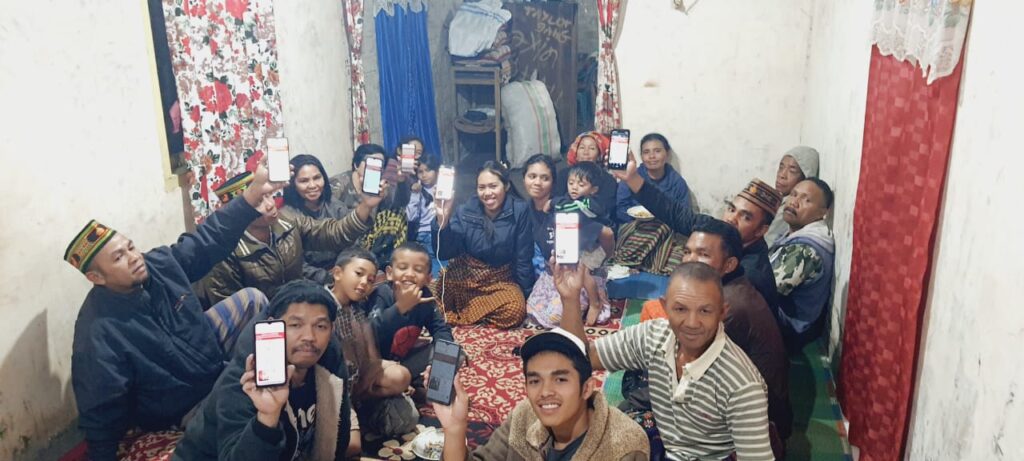
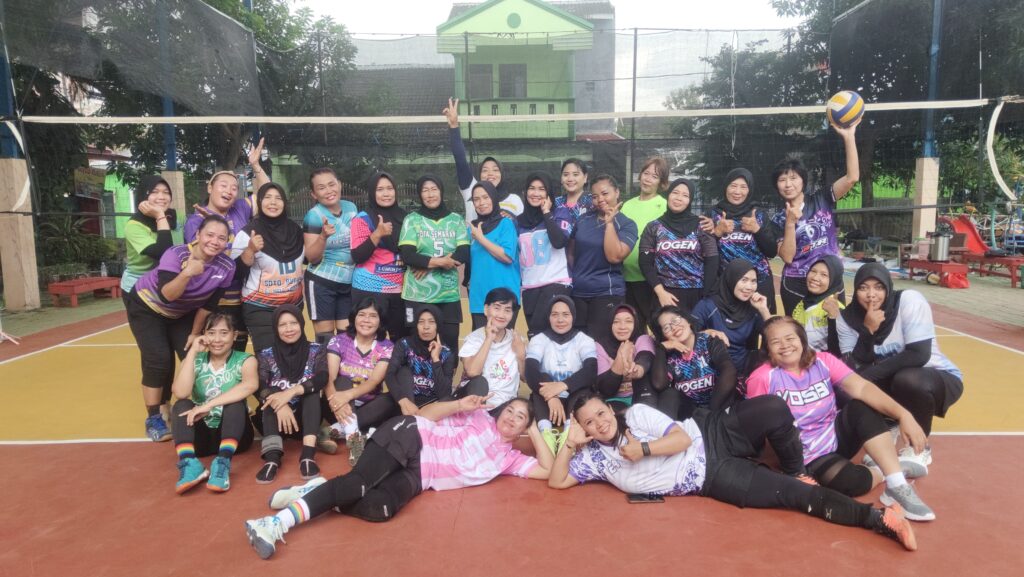
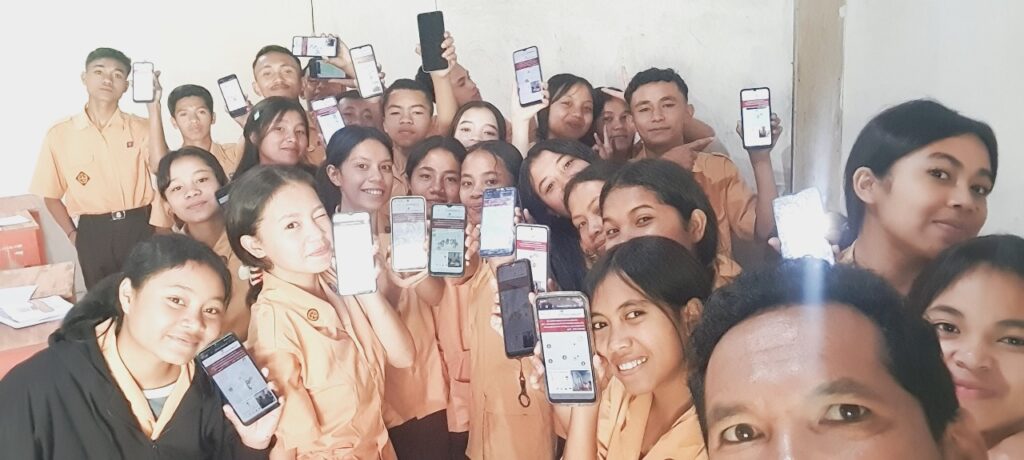
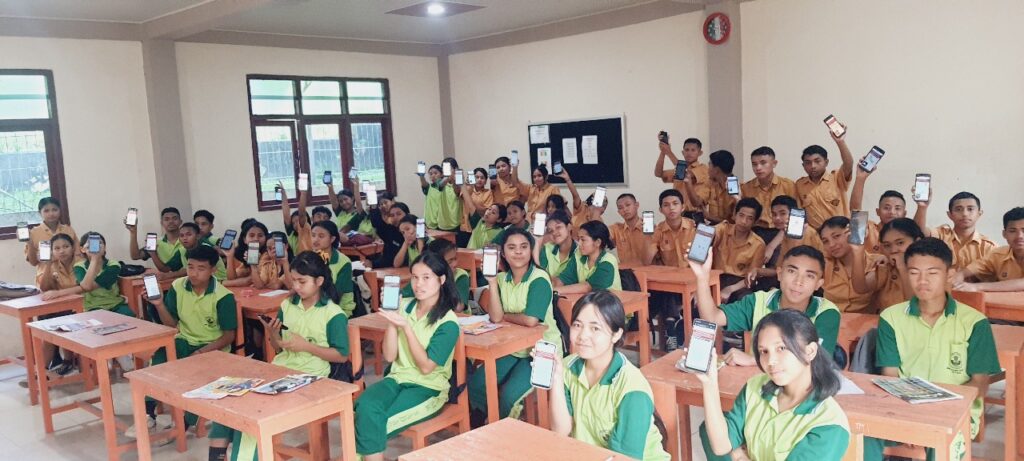
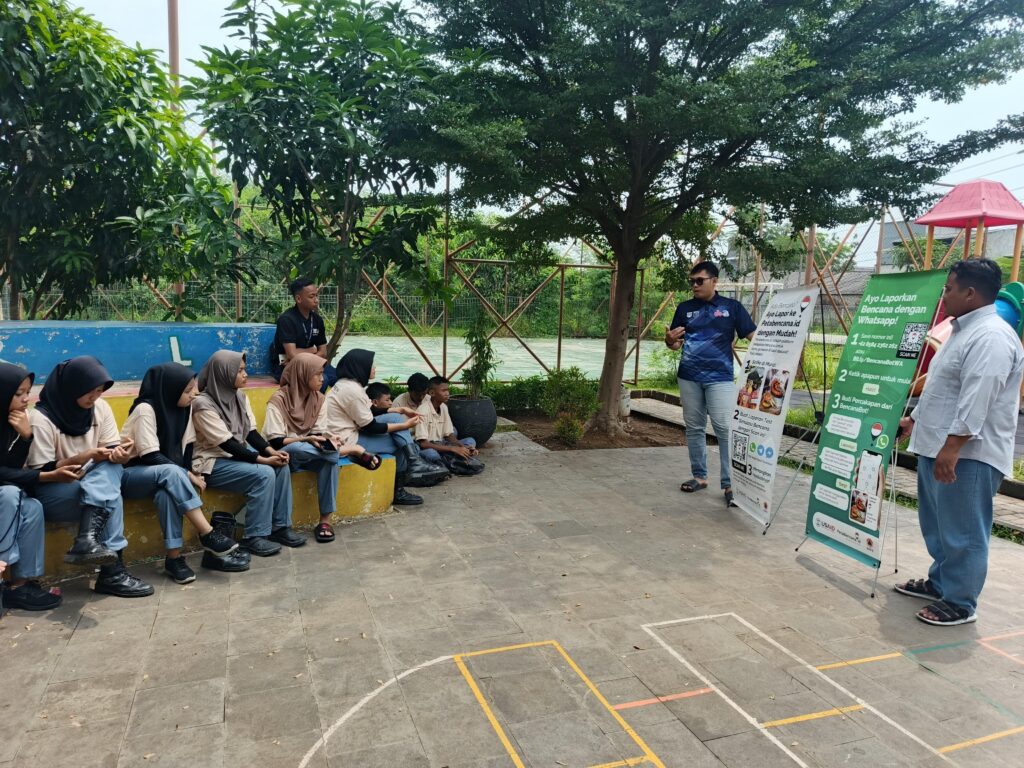
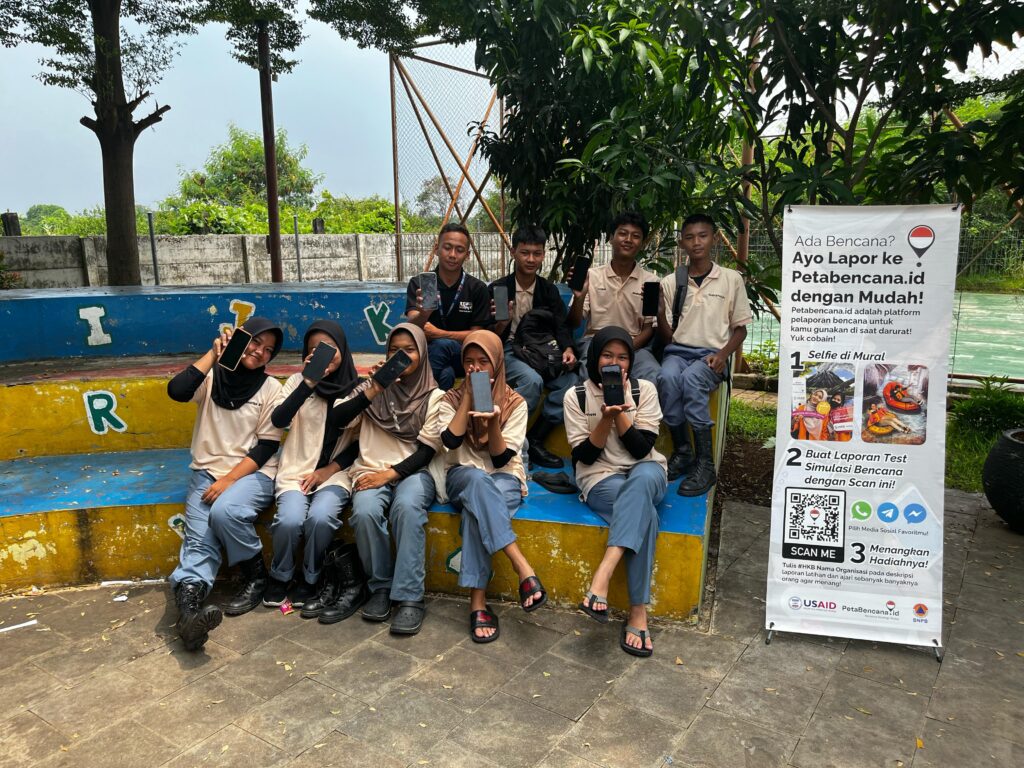
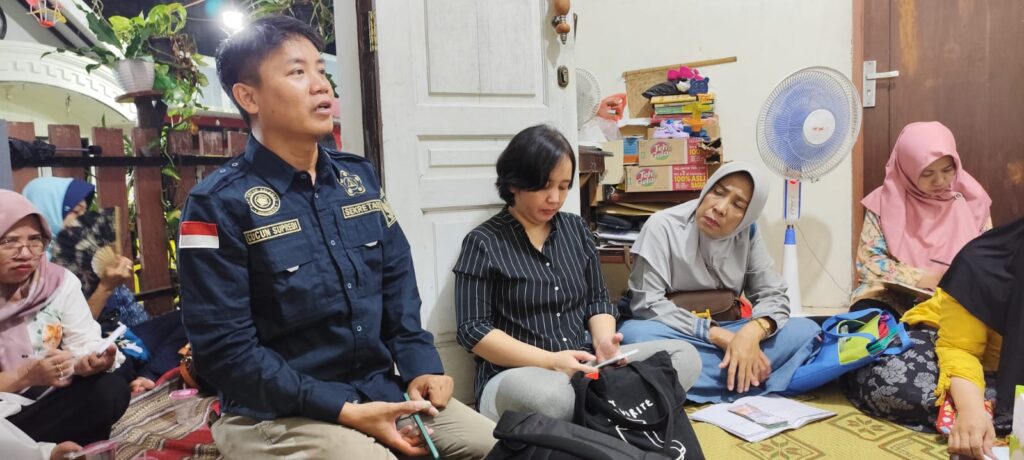
As part of the official commemoration of Hari Kesiapsiagaan Bencana (HKB) 2025, over 25,000 participants across 22 provinces were using AI tools to train their communities in disaster preparedness as part of a campaign organized by Yayasan Peta Bencana. Carried out under the spirit of #BergotongRoyong, the campaign activated youth leaders, educators, and community trainers to engage thousands in workshops, simulations, and collaborative preparedness activities.
Participants simulated real-time disaster reporting with DisasterBot, an AI-assisted bot developed by Yayasan Peta Bencana in partnership with BNPB. DisasterBot is an online chatbot – now integrated into WhatsApp, Telegram, Twitter, and Facebook – that reaches out to residents in disaster affected areas and helps them to submit real-time disaster reports. These reports are mapped on a free and open source platform, PetaBencana.id, and used to assist government agencies and first responders in response and recovery.
“Technology alone doesn’t build resilience—people do,” said Nashin Mahtani, director of Yayasan Peta Bencana. “The true power lies in pairing the deep, place-based knowledge of communities with the amplifying capacities of technologies we have today to create a response system that is faster, more accurate, and more deeply rooted in the people it serves. When AI tools are designed carefully and collaboratively, with communities at the center, they can amplify local knowledge helping scale everyday acts of community coordination into a collective, life-saving force.”
HKB, a national initiative launched by Badan Nasional Penanggulangan Bencana (BNPB), calls on all sectors of Indonesian society to strengthen their readiness in the face of disasters. This year’s observance comes at a critical moment: as Indonesia and the broader region grapple with intensifying climate-related hazards—from extreme rainfall and flooding to prolonged drought and sea-level rise—community-centered disaster preparedness is more urgent than ever. Between January 1 and April 2, 2025, Indonesia faced 804 natural disasters, based on data from the National Disaster Management Agency (BNPB). Floods topped the list as the most frequent disaster, with 547 reported cases.
One of the participants of PetaBencana’s campaign, Mr. Kasbu, from BPBD Rokan Hilir Regency, said that in facing a disaster, we cannot stand alone: “Because disasters can happen at any time, preparedness must begin as early as possible.” He emphasized the importance of mobilizing the community, working together to build resilience. “It’s never too late to start preparing,” he said.
“Mutual aid is not only carried out between communities, but can also be established with related government agencies. When communities reported flooding through the PetaBencana.id platform earlier this year, the report was immediately received and followed up with quick action by the local government. The government sent assistance in the form of heavy equipment to carry out dredging, in order to reduce the risk of flooding in the affected areas that had been reported by volunteers. Through the PetaBencana.id platform, residents also conveyed the various needs of affected residents directly from the field. This information allows the local government, BAZNAS, and the Social Service to distribute aid in a targeted manner. The spirit of true mutual cooperation is reflected in the involvement of all parties—both the community and the government—in building resilience together.”
Jumriah, a volunteer for BAZNAS Disaster Response in South Sulawesi, shared the role that technologies like PetaBencana.id plays in enabling communities to collaboratively respond during disasters—gathering important information about damage, number of victims, resource needs, and progress in the recovery process. With the power of verified informatiom, Jumriah demonstrated how every resident can come together to build a stronger, more climate resilient future. As discussions about resilience deepen, the campaign is also laying the groundwork for what comes next.
Building on more than a decade of community-driven disaster response work, Yayasan Peta Bencana is preparing to launch a new initiative: PetaGotongRoyong. The platform aims to expand the model of collective preparedness by supporting peer-to-peer coordination and mutual aid before, during, and after disasters.
PetaGotongRoyong enables neighbors to quickly locate help, share resources, and organize responses through an open, accessible digital interface. The platform builds on lessons from past emergencies—where communities have often improvised local solutions while waiting for formal aid—and reflects the growing need for flexible, community-led infrastructures as climate extremes become the new normal.
The official public launch of PetaGotongRoyong will take place on May 17, 2025, with a showcase of the technology and the stories of the communities helping to shape it.
As the region faces urgent environmental challenges, initiatives like HKB—and the systems of care they activate—highlight a broader shift in disaster governance. Not just toward early warning, but toward early organizing. Not just resilience, but solidarity,
And in Indonesia, where gotong royong is not a buzzword but a lived ethic, this movement is already underway.
Leave a Reply